
You’ve just received an IRS Collection Notice in the mail and you’re not quite sure what it means. These notices can appear daunting, but they’re simply your notice to pay up on outstanding tax debts. If you’re unsure about the specifics or what steps to take next, you’re not alone. So, let’s begin to break down these notices, their implications, and what they mean for you.
What Happens When the IRS Sends You to Collections
A CP504 is the IRS’s Notice of Intent to Levy under IRC §6331(d). If the balance is not paid immediately, the IRS can levy income and bank accounts and seize property or rights to property, including a state income tax refund (IRS.gov, Understanding your CP504 notice). After a CP504, the IRS must first issue a formal Notice of Intent to Levy and Your Right to a Hearing, which advises of the right to a Collection Due Process hearing with the IRS Independent Office of Appeals before levy action is taken (IRS.gov, Collection due process FAQs; IRC §6330(a)). LT11 and Letter 1058 are those final notices (IRS.gov, Collection due process FAQs), and the notice carries a 30-day window to request a hearing (IRC §6330(a)). The date on the notice is the date to treat as the deadline.
Tax Debt Relief Group, led by Peter Kici, EA, reads the notice and responds to the IRS on your behalf under a power of attorney. Call (407) 531-8705 for a free, confidential consultation.
Understanding IRS Collection Notices
Understanding IRS collection notices can seem quite daunting, but don’t worry, you’re not alone. These notices are the IRS’s way of communicating with you about your taxes, and it’s crucial to know how to respond.
Navigating IRS Collection Notices
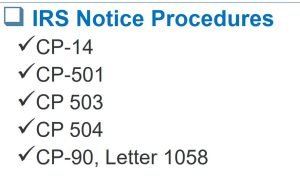
The IRS’s collection notices come in sequence: a CP504 Notice of Intent to Levy, then a formal Notice of Intent to Levy and Your Right to a Hearing (IRS.gov, Collection due process FAQs). Tax Debt Relief Group reviews the notice you hold, confirms the balance and responds to the IRS for you. Call (407) 531-8705.
Disagreeing With a Notice

The final notice of intent to levy carries Collection Due Process hearing rights before the IRS Independent Office of Appeals (IRS.gov, Letters and notices offering an appeal opportunity). A levy or seizure action can also be appealed through the Collection Appeals Program (IRM 8.24.1). Tax Debt Relief Group handles disputes and hearing requests for clients. Call (407) 531-8705.
Identifying and Avoiding IRS Scams
Scammers often exploit the fear surrounding IRS interactions, so it is important to know how the IRS actually makes contact.
Spotting Fraudulent IRS Communications
The IRS says it generally contacts taxpayers by mail first, does not leave pre-recorded, urgent or threatening messages, does not initiate contact by email to request personal or financial information, and does not use text messages or social media to discuss personal tax issues (IRS.gov, Tax scams continue year-round; IRS.gov, Dirty Dozen tax scams for 2026). The IRS lists these as telltale signs of a scam:
- A call demanding immediate payment by a specific method such as a prepaid debit card, gift card or wire transfer.
- A threat to bring in local police or other law enforcement to have the taxpayer arrested.
- A demand that taxes be paid without the opportunity to question or appeal the amount owed.
If a notice or call looks wrong, call Tax Debt Relief Group at (407) 531-8705.
Your tax responsibilities don’t have to be scary if you’re proactive and informed.
Peter P Kici EA
